Key Takeaways
- Recovery follows predictable phases, but individual variation exists.
- Early protection is critical — premature loading risks repair failure.
- Consistent physiotherapy compliance produces significantly better outcomes.
- Most patients return to daily activities by 2–3 months; full recovery takes 6–12 months.
- Patience and adherence to your rehabilitation protocol are essential for success.
Tendon and ligament repair surgery restores function to damaged structures, but recovery requires patience, discipline, and adherence to rehabilitation protocols. Understanding what to expect during each phase helps you navigate recovery successfully and achieve the best possible outcome.
Why Do These Injuries Need Surgery?
Tendons and ligaments have limited blood supply compared to other tissues. When completely torn, these structures cannot heal adequately on their own. Surgical repair aligns the torn ends and creates conditions for proper healing under controlled protection. You can read more about the injuries themselves on our tendon injuries and ACL and ligament injuries pages.
What Happens Immediately After Surgery? (Days 1–3)
You will leave surgery with:
- A bulky dressing protecting the repair site
- A splint positioning your joint in a healing-protective position
- Pain and swelling managed with medications
- A surgical nerve block providing initial pain relief (wears off within 12–24 hours)
During this phase, focus on pain control, protecting the repair, managing swelling through elevation, and beginning gentle motion exercises as prescribed by your surgical team.
Early Protection Phase (Days 4–21)
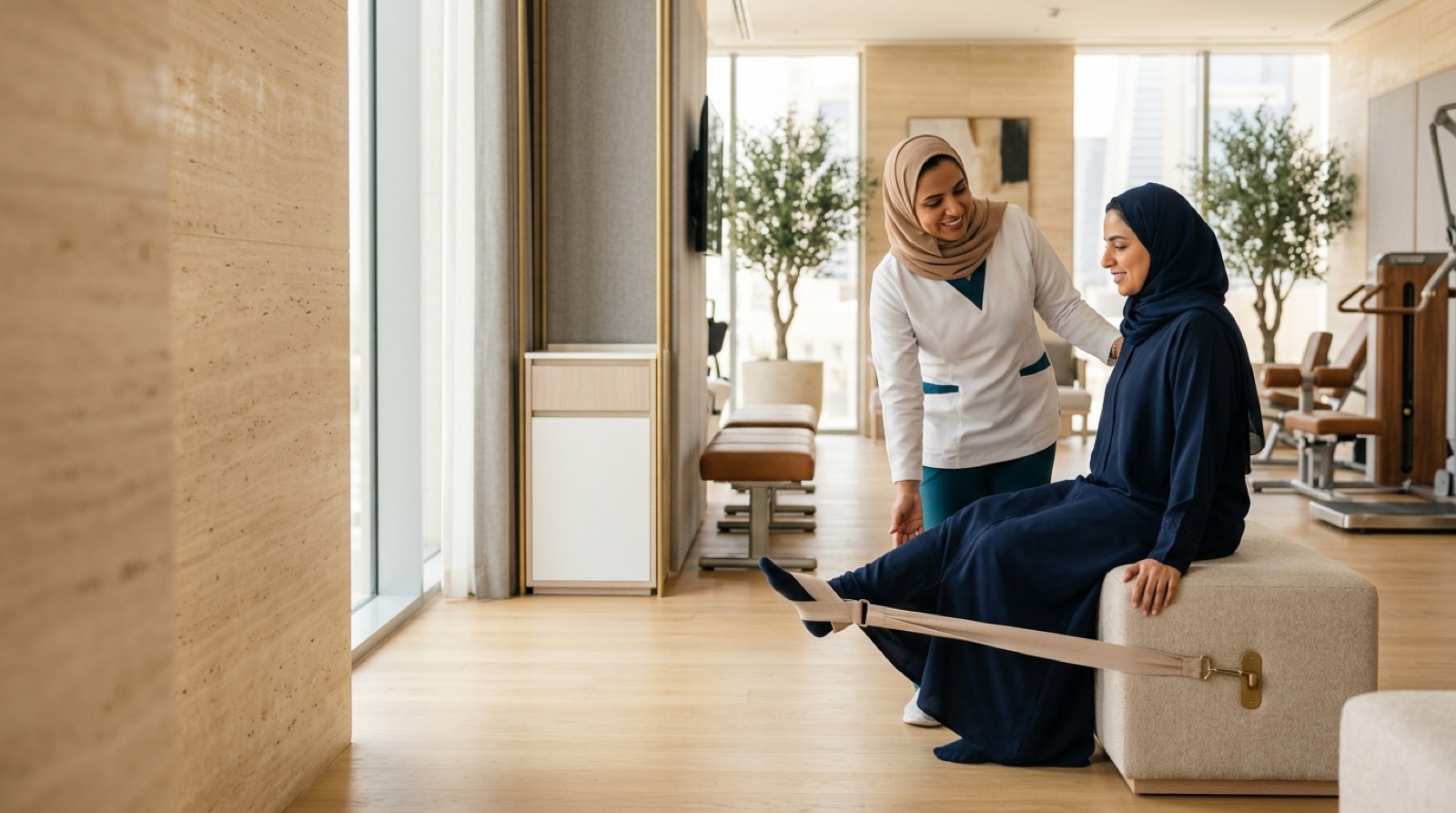
Your bulky dressing is replaced with a custom splint providing continued protection while allowing supervised movement. You progress from passive motion (therapist-assisted) to active-assisted motion (you initiate movement with assistance).
- Splint worn 24 hours daily; removed only for therapy
- Specific protected motion exercises performed 4–5 times daily
- Physiotherapy typically 2–3 times weekly
- Continued pain and swelling are normal during this stage
During this phase, no active resistance movements or loading of the repaired structure. Following restrictions precisely protects your repair.
Early Active Motion Phase (Weeks 3–7)
You progress to active motion — moving the joint independently, though still protected by splinting between sessions. Goals include:
- Restoring full passive range of motion
- Achieving good active range of motion
- Progressing from isometric to gentle resistance strengthening
- Beginning light functional activities within protected ranges
Strengthening Phase (Weeks 8–12)
Splinting protection typically ends. Progressive resistance exercises begin, gradually loading the healing structure. By week 12, most patients should:
- Perform most daily activities without assistance
- Achieve 80–90% strength compared to the uninjured side
- Have full or near-full range of motion
- Be ready for light work or sport-specific training
Return to Full Function (Week 12 Onwards)
Most repairs achieve functional capacity for daily activities by 12 weeks. However, continued improvement occurs for 6–12 months.
- Desk work — often resumes at 2–3 weeks with modifications
- Light manual work — around week 8
- Heavy labour — typically 12–16 weeks
- Sport-specific training — after week 12 with guided progression
- Full return to sport — 4–6 months for most injuries; longer for high-demand activities
What Factors Affect Recovery Speed?
Favourable Factors
- Younger age
- Good overall health
- Strict compliance with rehabilitation
- Single structure repair (versus multiple structures)
- Good blood supply to the injury area
- Positive psychological outlook
Unfavourable Factors
- Advanced age
- Multiple medical conditions
- Poor compliance with therapy
- Complex repairs involving multiple structures
- Smoking
- Previous injuries to the same area
- Anxiety or depression
What Are Common Challenges During Recovery?
- Motion taking longer than expected to achieve
- Stiffness persisting despite good adherence
- Strength plateaus requiring extended strengthening
- Scar tissue formation limiting motion
- Persistent swelling
- Psychological hesitation despite physical recovery
What Should I Avoid During Recovery?
- Don’t skip therapy — formal physiotherapy produces significantly better outcomes than self-directed exercise alone.
- Don’t overload too soon — returning to heavy activity before adequate healing risks re-rupture.
- Don’t ignore swelling — persistent swelling suggests you’re progressing too aggressively; reduce activity.
- Don’t rush return to sport — premature return significantly increases re-injury risk.
Expert FAQ
How long until I can use my hand, arm, or leg normally?
Most patients return to daily activities by 2–3 months. Full strength and function typically require 6–12 months, with continued improvement possible beyond that timeframe.
Why is physiotherapy so important?
Clinical evidence consistently shows that supervised rehabilitation produces better outcomes than self-directed exercise. Physiotherapists ensure appropriate progression and prevent complications from over- or under-loading the repair.
What if I’m not progressing as expected?
Contact your surgeon if you’re not achieving expected milestones. Complications like adhesions (scar tissue stiffness), infection, or repair failure require timely intervention.
Will I regain full strength?
Most patients achieve functional strength for their desired activities. Achieving 80–90% of pre-injury strength is typical; some patients regain 100%. Consistent rehabilitation is the key factor in maximising recovery.
Medical disclaimer: This information is intended for educational purposes and should not replace professional medical advice. Every patient’s condition is unique. Please consult Professor Abdullah Al-Othman or your healthcare provider for diagnosis and treatment recommendations specific to your situation.
Recovering from tendon or ligament repair? Contact Professor Abdullah Al-Othman’s office with questions about your recovery progress or rehabilitation plan, or call +966 50 580 8852.