
Spine Care
Disc Prolapse (Herniated Disc)
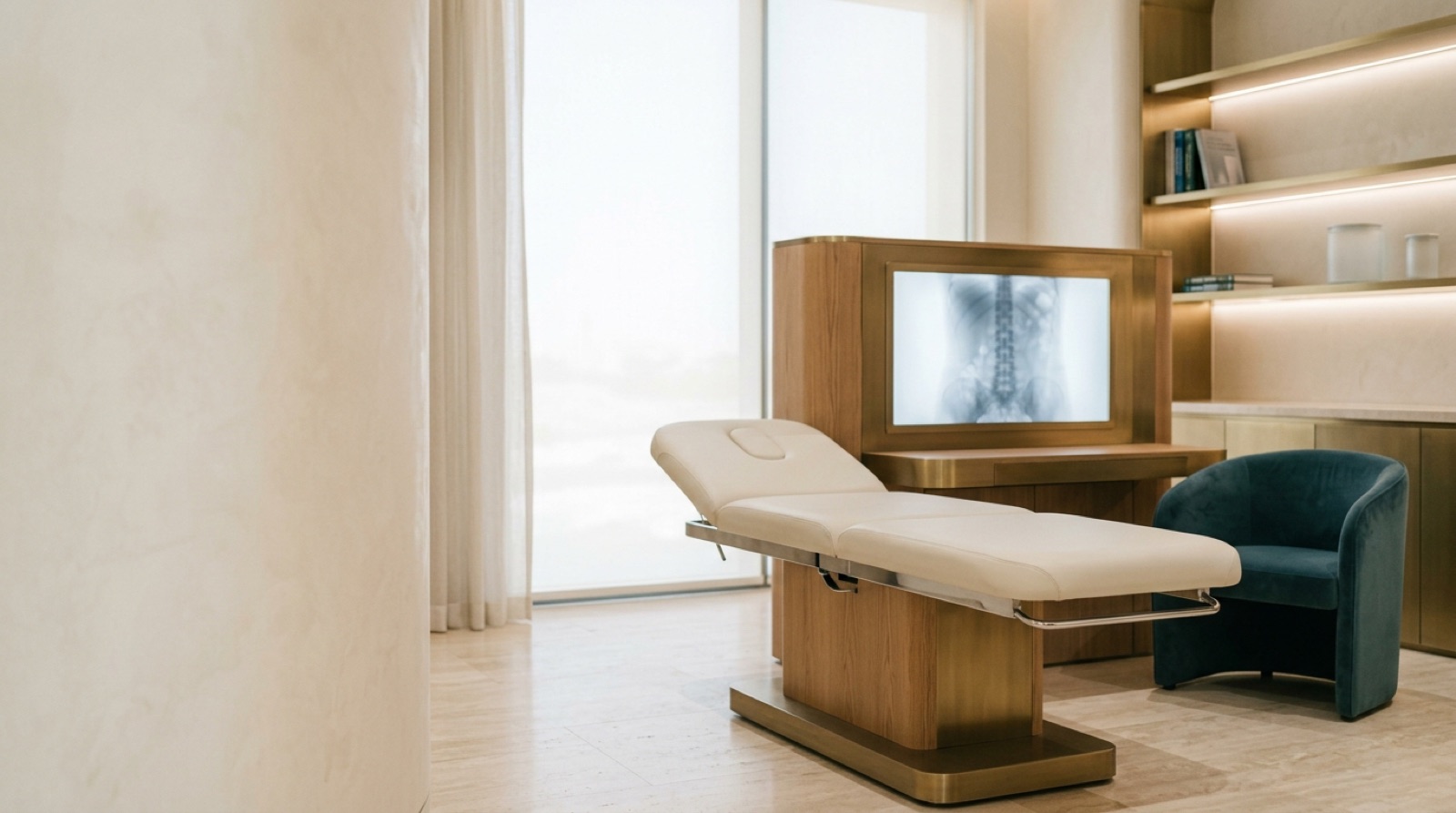
A herniated disc occurs when the soft centre of a spinal disc pushes through its tougher outer layer, irritating or compressing nearby nerves and causing pain, numbness, or weakness.
What It Is
Understanding a Herniated Disc
Most disc herniations occur in the lower back (lumbar spine), though they can also affect the neck (cervical spine). The condition is common, and many people recover well with conservative treatment.
Symptoms depend on the location and size of the herniation, and whether it is pressing on a nerve. Their pattern and duration help guide diagnosis and the right treatment plan.
Symptoms
How Disc Prolapse Feels
- Lumbar herniation — pain in the lower back, buttock, and leg (sciatica), often travelling down the back of the thigh into the calf or foot, with numbness, tingling, or weakness lifting the foot.
- Cervical herniation — neck pain radiating into the shoulder, arm, or hand, with numbness or tingling in the fingers and weakness in the arm or grip.
- General patterns — symptoms often worsen with bending, lifting, or prolonged sitting; coughing or sneezing may trigger sharp pain.
Causes & Risk Factors
Why Discs Herniate
Disc herniation usually results from gradual wear and tear (disc degeneration). As discs age, they lose water content and flexibility, making them more prone to tearing. Traumatic injury can also cause it, but is less common.
- Heavy or repetitive lifting with poor technique
- Sudden twisting or bending movements
- Prolonged sitting, especially with poor posture
- Excess body weight, smoking, and genetic predisposition
Diagnosis
How Disc Prolapse Is Diagnosed
01
Clinical Examination
Testing reflexes, muscle strength, walking ability, and sensation. The straight-leg-raise test assesses nerve root tension.
02
MRI Scan
The most detailed imaging for disc herniation — shows the disc, nerve roots, and spinal canal clearly.
03
X-ray, CT & Nerve Studies
X-ray rules out fractures; CT is used when MRI is unavailable; EMG identifies which nerve root is affected.
Treatment · Step One
Non-Surgical Care First
Most herniated discs improve within 6 to 12 weeks with conservative treatment. Surgery is not the first step for most patients.
- Pain medication — anti-inflammatories for mild to moderate pain; prescription medication for more severe symptoms.
- Physiotherapy — strengthening the core and back, improving flexibility, and reducing pressure on the disc.
- Activity modification — avoiding aggravating movements; short rest, but not prolonged bed rest.
- Epidural steroid injections — reduce inflammation near the nerve root and allow physiotherapy to progress.
- Nerve-pain medication — gabapentin or pregabalin to manage nerve-related pain and numbness.
Treatment · When Needed
When Surgery Is Considered
Surgery may be recommended if conservative treatment fails after 6 to 12 weeks, if symptoms are severe, or if there is significant neurological deficit such as weakness or progressive numbness.
- Microdiscectomy — a minimally invasive procedure to remove the disc fragment pressing on the nerve. The most common surgery for lumbar herniation.
- Laminectomy — removal of part of the vertebral bone to create more space for the nerve roots, sometimes combined with discectomy.
- Spinal fusion — joining two vertebrae when there is instability or the disc must be fully removed.
Recovery from discectomy typically involves 4 to 6 weeks before light activity; full recovery may take 3 to 6 months.
Reassurance
Most herniated discs settle on their own —
surgery is reserved for the few who truly need it.
Red Flags
Seek Emergency Care
A disc herniation can occasionally cause cauda equina syndrome, a medical emergency. Seek immediate care if you experience:
- Loss of bladder control (inability to urinate or incontinence)
- Loss of bowel control
- Numbness in the groin, inner thighs, or buttocks (saddle anaesthesia)
- Sudden severe weakness in both legs, or rapidly progressive symptoms
Cauda equina syndrome requires urgent surgical decompression. Delays can lead to permanent nerve damage.
Get Started
Symptoms That Won’t Settle?
If you have symptoms of disc prolapse that have not improved, call +966 50 580 8852 to schedule an evaluation with Professor Al-Othman.
Related
Related Spine Conditions
Spinal Stenosis
Narrowing of the spinal canal that can accompany or follow disc problems.
Lumbar Fixation
Spinal fusion for instability when a disc must be fully removed.