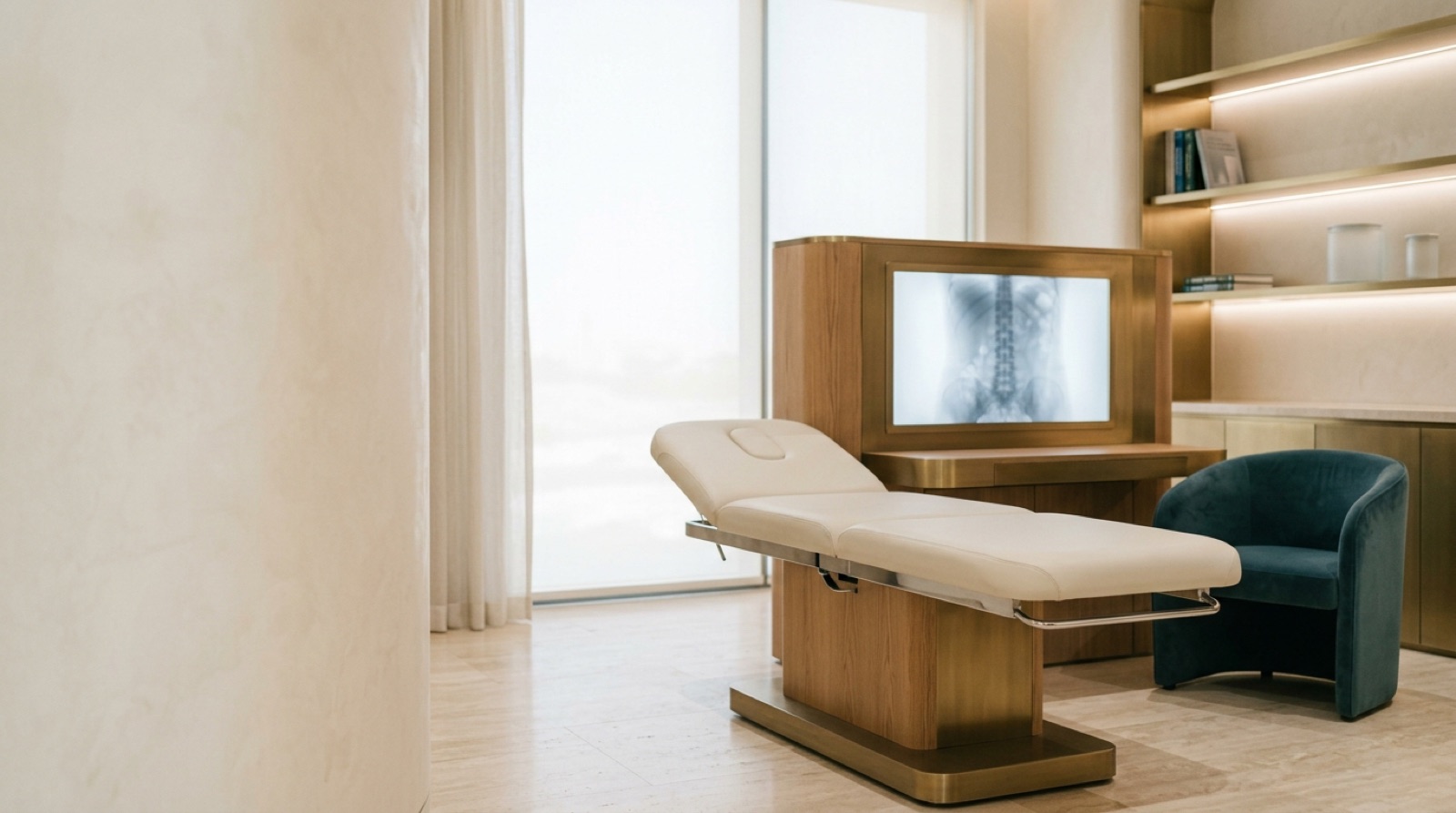
Spine Care
Spine Care & Lumbar Surgery
Back pain is one of the most common reasons people see an orthopaedic surgeon. Professor Al-Othman evaluates each spine problem through careful examination and imaging — and treats most patients with conservative care before surgery is ever considered.
What We Treat
Spine Conditions & Procedures
From disc problems and nerve pain to instability and deformity — each condition has its own pathway, and most begin with non-surgical care.
Disc Prolapse
A herniated disc presses on nearby nerves, causing back, leg, or arm pain. Most cases recover without surgery.

Lumbar Fixation
Spinal fusion joins vertebrae into a single solid bone, eliminating painful movement caused by instability.

Sciatica
Pain radiating along the sciatic nerve from the lower back into the leg. Around 80–90% improve with conservative care.
Spinal Stenosis
Narrowing of the spinal canal that compresses nerves, causing leg pain or cramping when walking or standing.

Corrective Surgery
Restoring alignment and stability in deformity — scoliosis, kyphosis, and post-traumatic spinal problems.
Begin With a Consultation
Bring your imaging and reports. Professor Al-Othman will review your case and recommend the right pathway for your symptoms.

Our Approach
A Conservative-First Pathway
Most spine conditions improve without surgery. The first step is usually a structured conservative care plan, given an adequate trial of 6 to 12 weeks. Surgery is considered only when symptoms persist, worsen, or there are neurological deficits.
- Physiotherapy — targeted exercise to strengthen the core, improve posture, and reduce load on the spine.
- Medication — anti-inflammatories, muscle relaxants, or nerve-pain medication to manage symptoms.
- Activity modification — adjusting daily and work habits to reduce strain on the spine.
- Epidural steroid injections — corticosteroid near the affected nerve root to reduce inflammation and pain.
- Weight management — reducing excess body weight to decrease mechanical stress on spinal structures.
Common Causes
What Causes Spine Pain
01
Disc Herniation
The soft inner material of a disc pushes through its outer layer and presses on nearby nerves.
02
Spinal Stenosis
Narrowing of the spinal canal that compresses the spinal cord or nerve roots. More common with age.
03
Spondylolisthesis
One vertebra slips forward over the one below it, causing instability and nerve irritation.
04
Degenerative Disc Disease
Wear and tear on spinal discs that leads to pain, stiffness, and reduced mobility.
05
Facet Joint Arthritis
Inflammation of the small joints that connect vertebrae, often causing localised back pain.
06
Muscle Strain
Overstretching or tearing of muscles and ligaments in the back. Often resolves with rest and physiotherapy.
A Considered Approach
Surgery is not the first option —
but in the right situation, it offers the clearest path to recovery.
Red Flags
Seek Emergency Care
The following symptoms require immediate medical attention. Do not wait for a routine appointment — go to an emergency department.
- Cauda equina signs — loss of bladder or bowel control, saddle numbness (groin, inner thighs, buttocks), or sudden weakness in both legs. This is a surgical emergency.
- Spinal infection signs — fever with severe back pain, especially with diabetes, recent surgery, or a weakened immune system.
- Progressive weakness — rapidly worsening leg strength, foot drop, or inability to walk.
- Unexplained weight loss with back pain — may indicate underlying pathology that requires investigation.
Read our guide: disc prolapse symptoms and when to seek urgent care.
Get Started
Persistent Back or Neck Pain?
Call +966 50 580 8852 or book online. Bring your imaging and reports for a full review with Professor Al-Othman.
Continue Exploring
Our Services
The full range of orthopaedic care beyond the spine — joints, trauma, sports, and more.
About the Professor
Training, fellowships, and the experience behind your spine care.